

As more organizations support remote and hybrid teams, secure access has become a top priority. Traditional VPNs are no longer enough to protect users, applications, and data. That is why businesses of all sizes are turning to Zero Trust Network Access (ZTNA) solutions.
Two commonly evaluated options in this space are Remote WorkForce ZTNA and NordLayer. While both aim to secure remote access, they take very different approaches. One is purpose-built for simplicity and fast deployment. The other is part of a broader, more complex platform. Understanding these differences can help IT leaders and managed service providers (MSPs) choose the right fit for their environment.
A focus on simplicity vs. platform complexity
One of the biggest distinctions between the two solutions is design philosophy.
Remote WorkForce ZTNA is built specifically for small to midsize organizations and MSPs. Its interface is intentionally simple and clean, with intuitive setup tools and policies that can be managed without deep security expertise. Organizations can move from a cloud-based VPN to full ZTNA quickly, often within hours, without specialized hardware or complicated configurations.
NordLayer, by comparison, is part of a broader SASE-style platform. While it offers a wide range of features, that depth can also introduce complexity. The management interface includes multiple modules, more configuration steps, and a steeper learning curve for administrators who may not have a security background.
In practice, both products are relatively easy to navigate, but NordLayer typically requires more onboarding and understanding of additional concepts before teams can fully use it effectively.
Deployment speed and time to value
For many organizations, speed matters. The faster a solution can be deployed, the faster teams can start working securely.
Remote WorkForce ZTNA is designed for rapid implementation. It can typically be deployed in hours with minimal configuration, allowing MSPs and IT teams to onboard users quickly and begin securing access almost immediately.
NordLayer also offers fast setup, but its broader feature set and layered architecture can add additional steps. In many cases, deployment may take longer as teams configure multiple modules and security settings to match their needs.
Pricing and feature access
Cost predictability is another major factor when comparing the two solutions.
Remote WorkForce ZTNA uses a straightforward pricing model. All features are included, there are no tier upgrades, and there are no long-term contracts required. Organizations can scale up or down as needed and maintain predictable monthly costs. From a business perspective, its model also supports stronger margins compared to NordLayer, giving partners and providers more flexibility to price competitively while still maintaining profitability.
NordLayer uses a tiered pricing approach, with multiple levels that unlock different capabilities. Entry-level plans provide basic functionality, but many core business features require higher tiers or add-ons. For example, key capabilities like firewall access, device posture security, and site-to-site connectivity may only be available at premium levels or as add-ons.
There are also fixed-cost considerations that can impact total spend. For organizations that need a dedicated gateway with a fixed IP address for IP allowlisting or network segmentation, NordLayer charges an additional $40 per month for a dedicated server. This cost is not included in the per-user pricing and is typically required for real-world ZTNA deployments that depend on allowlisting. In addition, most plans have a minimum of five users, which creates a baseline monthly cost even for very small teams.
A simplified view of the structure looks like this:
- Lite: $8 per user per month (annual billing), no dedicated IP option
- Core: $11 per user per month plus $40 per month for dedicated server with fixed IP
- Premium: $14 per user per month plus $40 per month for dedicated server with fixed IP
- Enterprise: custom pricing, typically 50+ users
This tiered structure and add-on pricing can make budgeting more complex, particularly for SMBs that want predictable monthly costs. Remote WorkForce may also be more cost-effective for organizations that prefer month-to-month flexibility.
Control, visibility, and architecture
Both platforms provide strong security features, but the experience of managing them differs.
Remote WorkForce ZTNA focuses on straightforward, group-based access policies with clear dashboards and simplified policy management. Its architecture is purpose-designed for zero trust access, helping reduce the risk of lateral movement by default while keeping administration manageable.
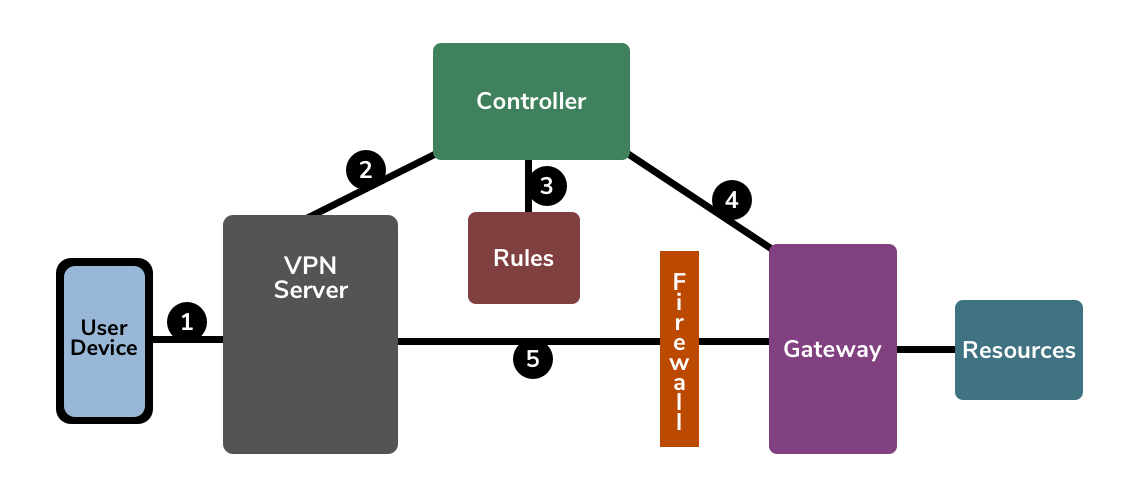
From an infrastructure standpoint, NordLayer relies on IPsec site-to-site VPNs, which can require open ports and exposed endpoints that may be scanned or targeted, whereas Remote WorkForce gateways initiate outbound connections to bring users into the environment, allowing ports to remain closed, reducing visible attack surface, and strengthening overall security posture.
Both platforms support essential security capabilities such as SSO, MFA, activity logging, and domain or malware filtering. NordLayer presents these within a broader collection of configurable tools, which can be valuable for organizations that want a wide range of controls in one place.
However, that breadth can also introduce added complexity. Managing multiple security layers and configuration points may require more expertise and time, especially for smaller IT teams, while Remote WorkForce ZTNA emphasizes delivering the core protections most SMBs need through a more streamlined, easier-to-manage experience.
Fit for MSPs and SMBs
Another key difference is the target audience.
Remote WorkForce ZTNA is purpose-built for MSPs and small to midsize businesses, particularly organizations with 10 to 250 users. It includes native multi-tenant capabilities, simple client management, and pricing structures designed to support channel partners.
NordLayer serves a broader market, from small teams to enterprise organizations. That wide focus can be beneficial for larger environments but may result in features that smaller organizations do not need or use.
Which is right for you?
Both Remote WorkForce ZTNA and NordLayer provide secure remote access and modern protection aligned with zero trust principles. The right choice ultimately depends on what an organization values most.
If the priority is simplicity, fast deployment, transparent pricing, and a solution built specifically for MSPs and SMBs, Remote WorkForce ZTNA stands out as a focused, easy-to-manage option.
If an organization is looking for a broader security suite with additional capabilities and is comfortable navigating tiered pricing and more complex configuration, NordLayer may be a good fit.
For many growing organizations, the decision comes down to a simple question: do you want an expansive platform with many modules, or a streamlined ZTNA solution that delivers the essential security features most SMBs need without unnecessary complexity?